




Why Counter-Drones is Necessary

date:2025.08.14

Views: 221
Beginner's Guide to Counter-Drones: From Understanding to Application
1. Why Counter-Drones is Necessary
Counter-drone operations have become a critical task for governments, militaries, and critical infrastructure managers worldwide, primarily to address the multiple risks and threats posed by the widespread adoption of drones. In simple terms, the core reasons for counter-drone measures are: to protect personnel, property, airspace, and information security, and to prevent drones from being misused—either maliciously or unintentionally.
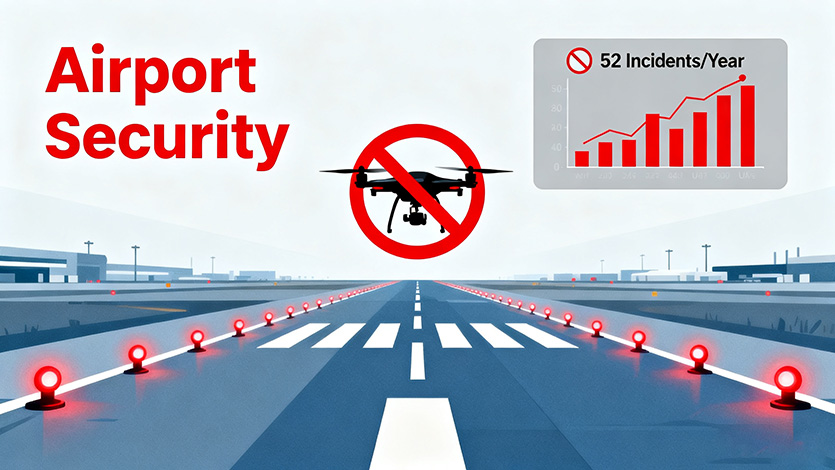
Counter-drone measures are required in the following areas:
Security and counter-terrorism threats
Critical infrastructure protection
Public safety and privacy protection
Aviation safety
Commercial and industrial protection
Military applications and defense

2. Classification of Counter-Drone Technologies
Counter-drone technology is a complex system, often referred to as a three-step process of "detection, identification, and neutralization." While classification methods vary, they are generally divided based on functional stages and technical principles.
Detection: Radar, radio frequency (RF) spectrum monitoring, electro-optical (visible/infrared) sensors, acoustic sensors, etc.
Identification: AI-based image recognition (analyzing electro-optical sensor footage), RF fingerprinting (analyzing unique characteristics of drone remote control signals), ADS-B for friend-or-foe identification, etc.
Neutralization: Divided into soft-kill and hard-kill methods.
Soft-kill aims to disrupt or take over drone control through electronic or cyber means, rendering it ineffective, forcing it to leave, or capturing it without physical destruction. This method is safer in populated areas and causes minimal collateral damage.
Hard-kill involves physically destroying the drone using direct means.




18824309650

info@tatusky.com
Newsletter
Submit


