



Anti drone system 2025

date:2025.10.27

Views: 204
Anti drone system 2025
---Market Trends, Core Technologies, and Tatusky Innovation Solutions
I. Introduction
1.1 What is a Counter-Unmanned Aerial System (C-UAS)?
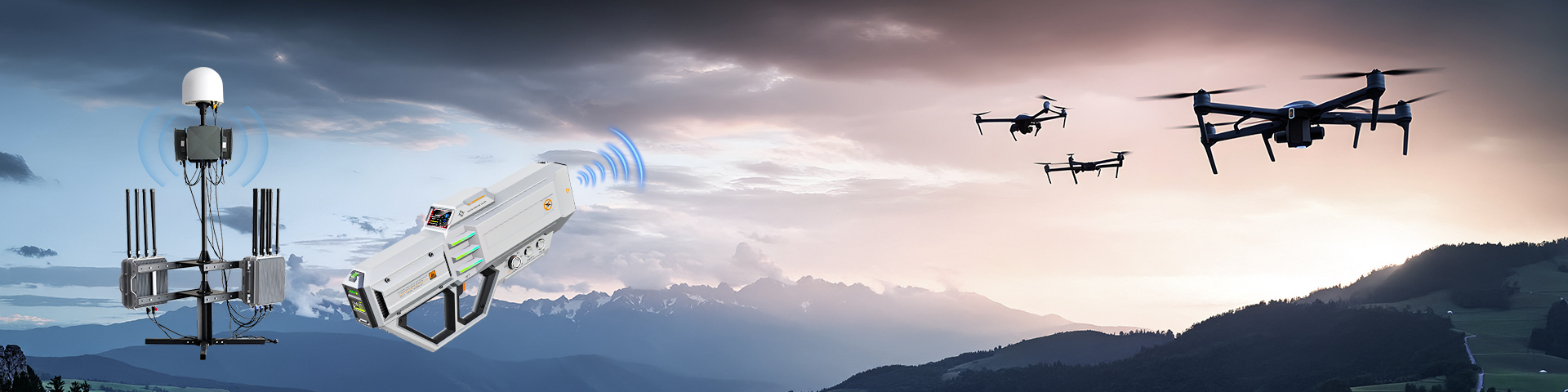
A Counter-Unmanned Aerial System (C-UAS) is an integrated technological solution designed to detect, identify, track, and neutralize unauthorized drones. It has evolved from single jamming devices into comprehensive low-altitude defense systems.
1.2 Industry Background
The proliferation of drones has led to a sharp increase in "unauthorized flight" incidents, driving demand for C-UAS solutions in scenarios such as urban security, protection of sensitive sites, and security for large-scale events.
1.3 Article Framework
This article focuses on the industry market, core technologies, and applications, with a specific analysis of Tatusky Technology's innovations in the field of urban airspace security.
II. Global C-UAS Market Overview
2.1 Market Size and Growth
Global: USD 1.7 billion in 2024, projected to reach USD 10.7 billion by 2034 (CAGR of 20%), driven by both military and civilian demand.
Regional: North America holds 24.3% share (strict regulations), Asia-Pacific is the fastest-growing region, China is projected to account for 47.5% of the East Asian market by 2034.
China: Projected to reach RMB 12 billion by 2025, reaching RMB 25 billion by 2030, with urban security and event security as core growth drivers.
2.2 Core Application Areas by Share
| Application Area | Market Share | Typical Scenarios |
| Military & Defense | 34% | Border control, Military base protection |
| Civilian Security | 28% | Urban patrols, Critical infrastructure protection |
| Border Security | 18% | Interception of cross-border drone smuggling |
| Event Security | 15% | Sporting events, Large gatherings |
*Source: Fact.MR "Counter-UAV Market Report 2024-2034"*
III. Core C-UAS Technologies and Innovation Trends
3.1 Detection & Identification: Multi-Sensor Fusion
Radar + RF Detection: Captures 2-18GHz signals, uses AI to reduce false alarms (e.g., Sweden's "Giraffe 1X" radar reduced false alarms by 80%).
Optical + Thermal Imaging: High resolution to distinguish drones from birds.
AI Models: DRBD-YOLOv8 enables real-time detection (mAP50 > 90%, 30+ FPS).
3.2 Neutralization: From Soft to Hard Kill
| Technology Type | Working Principle | Typical Application |
| RF Jamming | Jams control links | Urban areas, Event security |
| GNSS Spoofing | Forces landing via false navigation signals | Airports, Nuclear power plants |
| Directed Energy Weapons | Laser / EMP to destroy components | Military bases, Borders |
| Kinetic Intercept | Net guns / Anti-aircraft turrets | High-threat military scenarios |
3.3 Core Innovation Directions
Rapid Deployment: Modular design adaptable to temporary scenarios (e.g., Tatusky's portable system).
Agile Coordination: Remote management of distributed nodes across multiple platforms.
Extreme Environment Adaptation: Stable operation from -40°C to 70°C and in harsh conditions.
IV. Leading Solutions and Tatusky's Advantages
4.1 Global Benchmark Systems
Military-Grade: Norway's CORTEX TYPHON (Armed jammer + machine gun), Israel's DroneDome (360° coverage, 3.5 km radius).
Civilian-Grade: Germany's Skynex (Urban programmable ammunition), China's TDOA Grid Systems (Used in Hangzhou Asian Games).
4.2 Tatusky's Integrated Solution
End-to-End Protection: Integrates identification, tracking, jamming, and GNSS spoofing without integration gaps.
Scenario-Optimized Design: Tailored for low privacy impact in cities, sensitive sites, and low-interference needs for events.
Collaborative Architecture: Multi-device networking + remote control, compatible with smart city infrastructure.
V. Industry Challenges and Future Outlook
5.1 Core Challenges
Regulation: RF jamming must comply with regional regulations (e.g., FCC in the USA).
Environment: Urban high-rises and electromagnetic interference can reduce detection range by 30%-50%.
Cost: Laser / AI system costs are 2-3 times that of basic equipment.
5.2 Trends Towards 2030
AI Autonomy: Systems autonomously predict and respond to threats.
Laser Proliferation: 50 kW+ lasers dominate military / critical facilities (projected market size of USD 15 billion by 2030).
Civilian Popularization: Modular solutions like Tatusky's become standard for malls, residential areas.
VI. Conclusion
The C-UAS industry is entering a "solution-oriented" era, where integrated systems are replacing single-purpose devices. Driven by 20% annual growth, AI, rapid deployment, and multi-platform collaboration are core directions.
Tatusky focuses on urban and event security, bridging the gap between military-grade performance and civilian practicality, and is poised to become a leader in the global low-altitude security sector.




18824309650

info@tatusky.com
Newsletter
Submit


